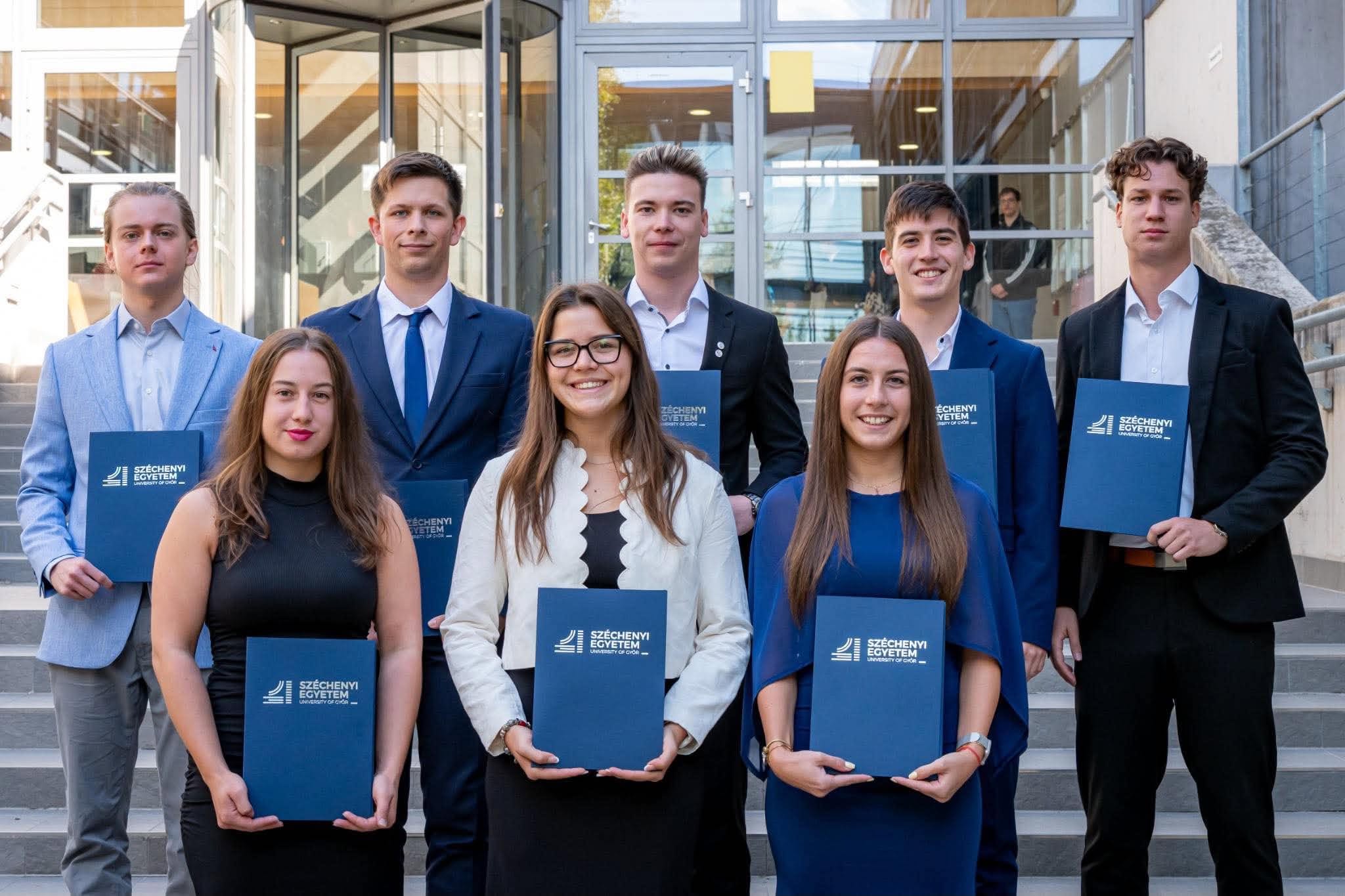

The faculty and students of the Kautz Gyula Faculty of Business and Economics at Széchenyi István University have once again demonstrated their high-level international expertise. At the EMAN (10th International Scientific Conference on Economics and Management), a prestigious international forum, the faculty’s researchers presented their latest findings on contemporary and niche topics, ranging from the educational applications of Artificial Intelligence to the credibility of CSR communication and influencer marketing.
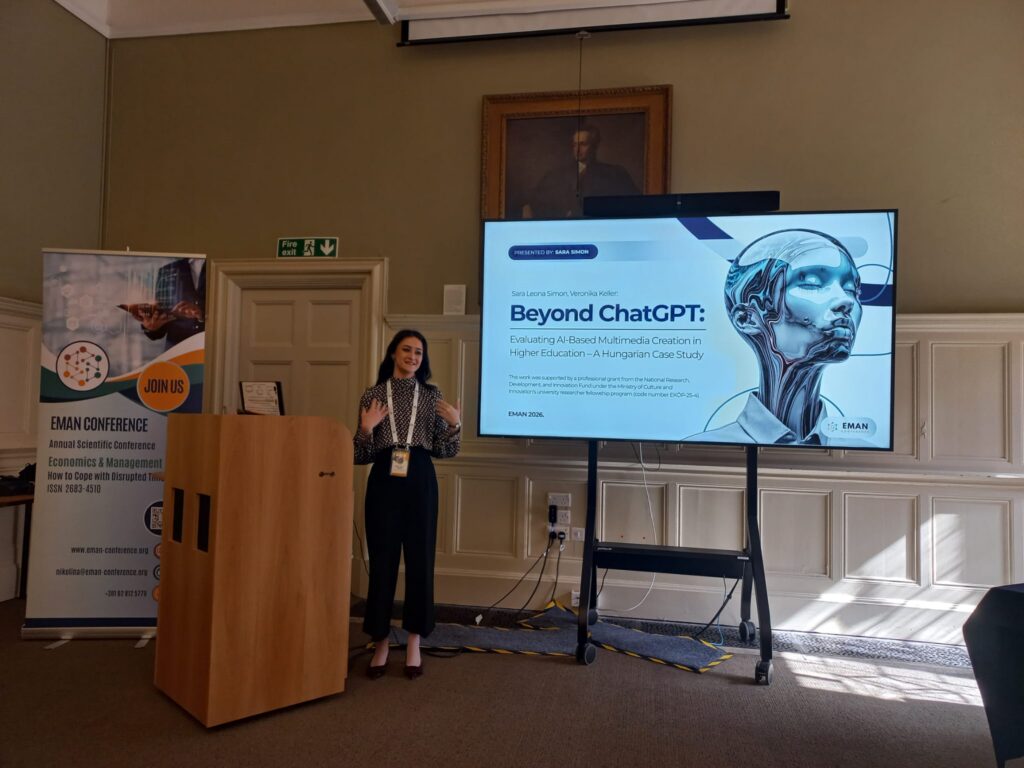
Sára Leona Simon, an intern at the Kautz Faculty and a Marketing MA student, delivered a highly engaging presentation titled “Beyond ChatGPT: Evaluating AI-Based Multimedia Creation in Higher Education – A Hungarian Case Study.” Her research involved 104 students to examine the practical application of Generative AI (GenAI). The project resulted in 86 AI-driven videos and presentations, which were evaluated by an audience of 467 people. The findings highlighted that while AI video production is more time-consuming, it results in significantly higher engagement and visual appeal among viewers. Sára’s research provides practical guidance for institutions on integrating these tools into the curriculum to enhance digital literacy.
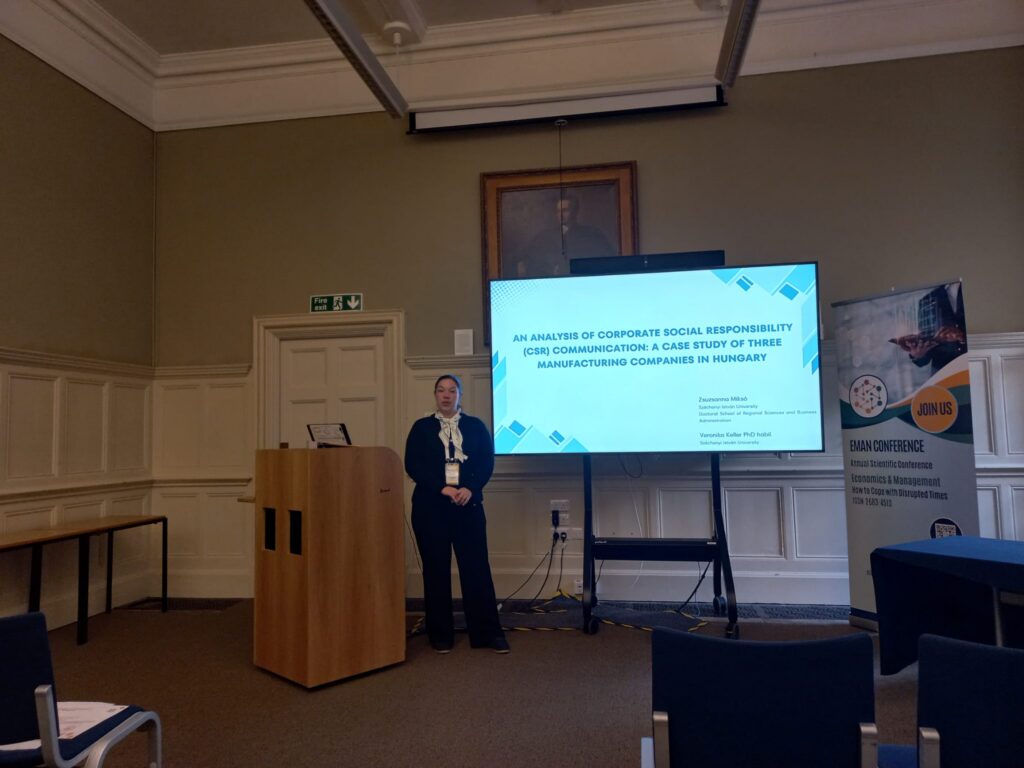
Zsuzsanna Miksó, a PhD student at the Doctoral School of Regional Sciences and Business Administration (RGDI), presented an analysis of corporate social responsibility (CSR) communication titled: “An Analysis of Corporate Social Responsibility (CSR) Communication: A Case Study of Three Manufacturing Companies in Hungary.” In her presentation, she examined consumer skepticism through the examples of three multinational manufacturing companies operating in Hungary. The research highlighted the tension between “marketing tools” versus “genuine responsibility,” particularly regarding the employment of people with disabilities. The results suggest that young adults find CSR messages credible only when they are closely linked to the company’s core activities and supported by transparent data (e.g., actual employment instead of paying rehabilitation contributions).
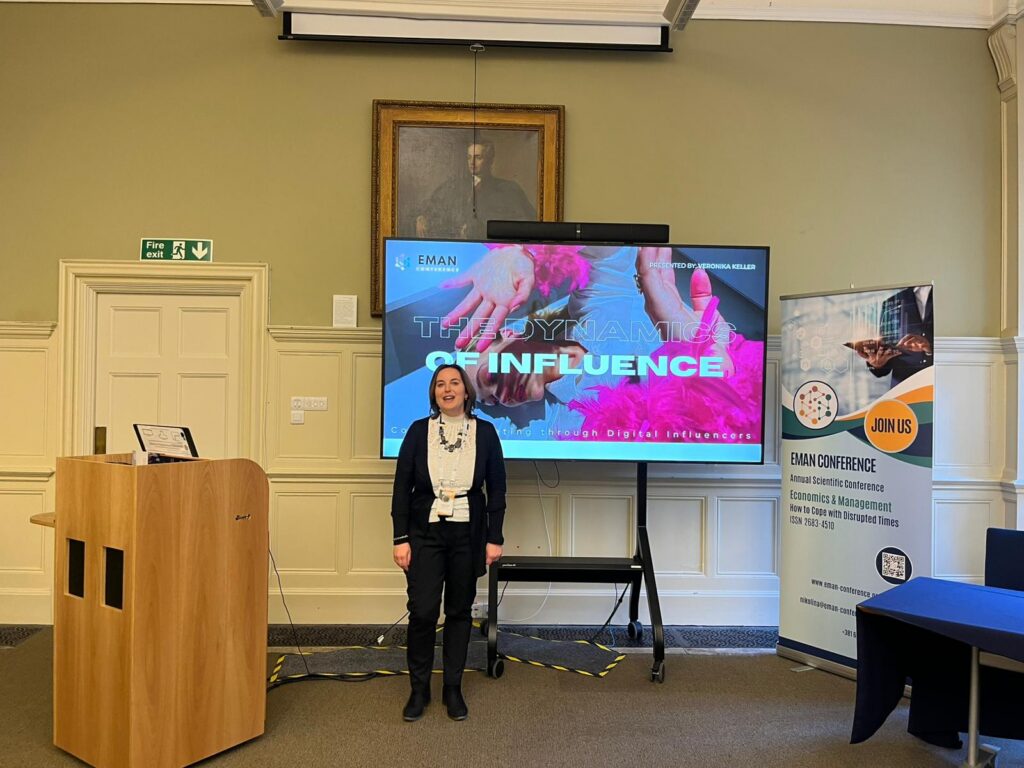
Dr. Veronika Keller, Associate Professor, introduced the audience to the world of TikTok and Instagram influencers in her presentation, “Influence and Content Marketing: Consumer Perception of Influencer Marketing Strategies.” Using a mixed-methods approach (content analysis, in-depth interviews, and a survey of 200 participants), the study compared the effectiveness of human influencers with that of AI-generated virtual influencers. Although virtual opinion leaders offer cost-effective and highly controllable solutions for brands, Generation Z still prioritizes human connection, emotional bonding, and authenticity. While excessive promotional content reduces trust in both types, engagement remains stronger with real-life influencers.
Participation in the conference and the research presented clearly reflect the Kautz Faculty’s commitment to the scientific investigation of modern economic processes and technological innovations.